28 Jul 2026
Layered Incentives Meet Built-In Controls: The Design of Comprehensive Gaming Experiences
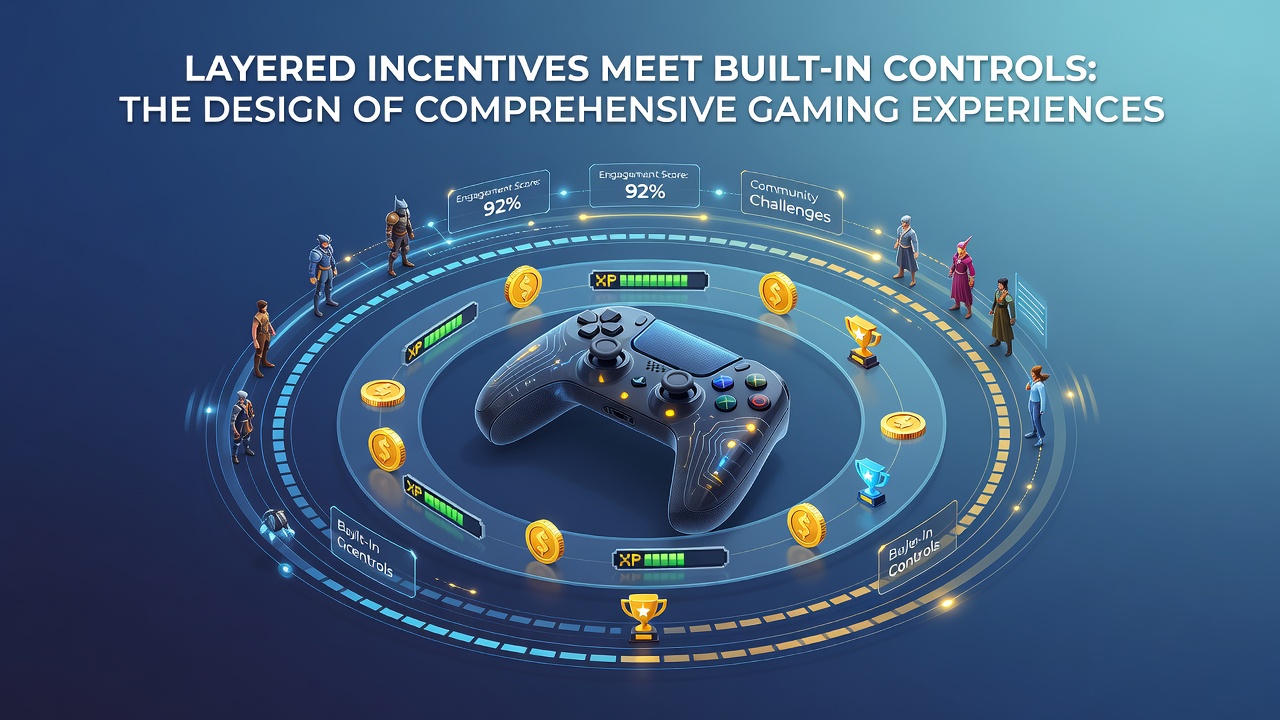
Modern game design increasingly relies on layered incentives that guide player progression alongside built-in controls that maintain system integrity and user safety, and developers combine these elements to create experiences that sustain engagement while preventing exploitation. Research from the Entertainment Software Association indicates that titles incorporating both reward tiers and automated safeguards report higher retention rates across multiple platforms, and data collected through 2025 shows consistent patterns in how these features operate together.
Core Components of Layered Incentive Systems
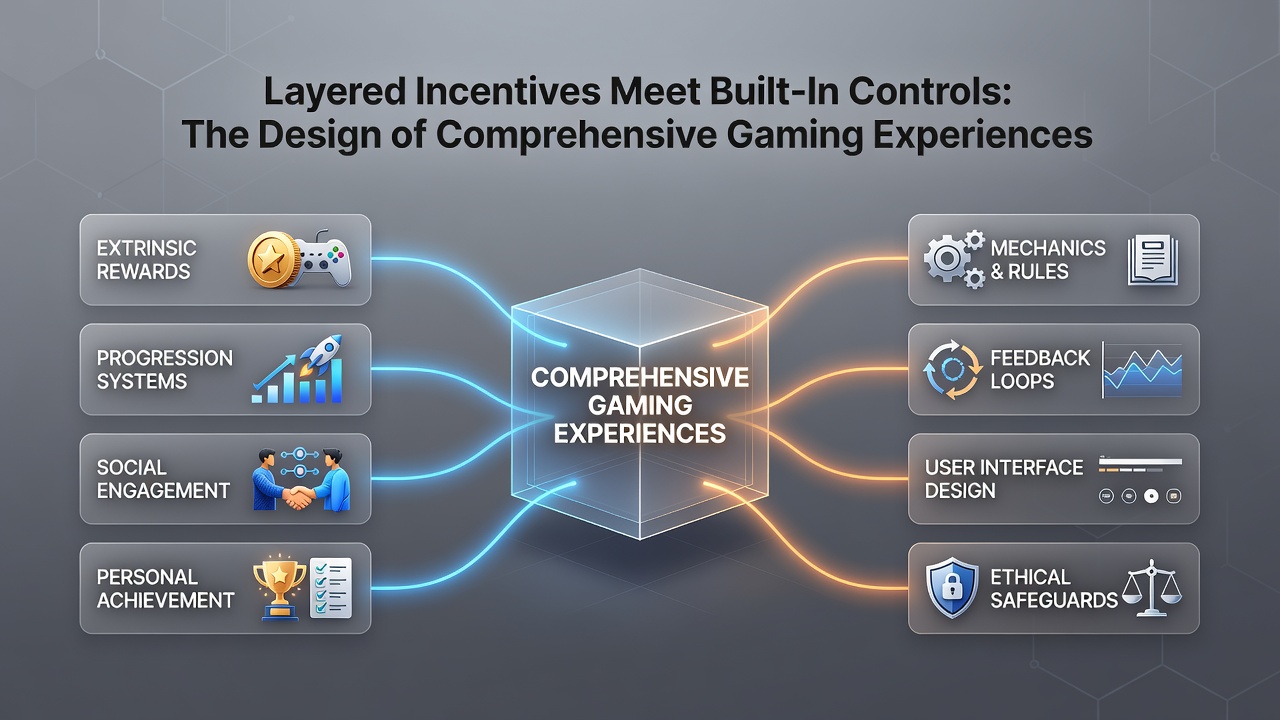
Game studios structure incentives through progression ladders, seasonal events, and resource economies that encourage repeated interaction, and these layers often include daily login bonuses, achievement milestones, and competitive rankings that scale in complexity. Observers note that such systems appear in both free-to-play and premium titles, where players advance through skill-based unlocks or time-gated content that rewards consistent participation, and examples from major releases demonstrate how incentive depth correlates with session length metrics tracked by analytics firms.
Design teams calibrate incentive density so that early rewards establish habits while later layers introduce scarcity that maintains challenge, and this calibration draws on behavioral data aggregated across millions of accounts. Studies published by academic institutions such as those affiliated with the University of Southern California highlight how variable reward schedules, when paired with transparent rules, produce stable engagement curves without triggering rapid churn.
Integration of Built-In Control Mechanisms
Built-in controls encompass algorithmic detection of irregular patterns, spending caps, time-management tools, and age-appropriate content filters that activate automatically based on account settings, and these mechanisms operate continuously to balance player freedom with platform accountability. Engineers embed these controls at the architecture level so that incentive delivery pauses or adjusts when predefined thresholds are reached, and this approach prevents scenarios where reward chasing overrides responsible usage.
Regulatory frameworks in regions including the European Union and Australia require documented transparency around these controls, and reports from the eSafety Commissioner of Australia detail how mandatory disclosure of control features influences design decisions for games distributed in those markets. Developers therefore document control parameters during certification processes, which ensures compatibility with incentive layers without compromising either function.
Case Examples from Current Titles
One widely referenced example involves a battle royale title that layers battle-pass rewards with real-time cheat detection and session-time alerts, and the combination allows high-skill players to pursue competitive ranks while casual participants receive guided onboarding that includes optional limits. Another instance appears in a mobile role-playing game where resource-gathering incentives connect directly to parental-consent modules and expenditure trackers, and telemetry from that title shows reduced refund requests after the integration was refined in mid-2025.
Design documentation released by studios reveals iterative testing cycles that measure how incentive notifications interact with control pop-ups, and adjustments frequently involve timing offsets or visual hierarchy changes that preserve reward visibility without overriding safety prompts. Those who've analyzed post-launch patches note that successful titles treat controls as core systems rather than add-ons, which reduces conflicts during updates.
Industry Trends Emerging Toward July 2026
Industry roadmaps indicate that several major engines will release updated toolkits by July 2026 that embed incentive-control synchronization as default modules, and these updates respond to cross-platform certification requirements already under discussion among trade organizations. Figures from the Interactive Games and Entertainment Association project increased adoption of unified dashboards that let players review both accumulated rewards and active control settings in a single interface.
Developers preparing for these changes conduct internal audits that map every incentive trigger against corresponding control responses, and this mapping process identifies edge cases where reward multipliers might bypass intended limits. Data from beta environments demonstrates that early integration testing reduces post-release hotfixes by measurable percentages, and studios that share anonymized findings contribute to collective best-practice libraries maintained by industry consortia.
Technical Implementation Patterns
Backend architectures increasingly route incentive events through centralized rule engines that also evaluate control states before finalizing transactions, and this routing occurs in milliseconds to maintain seamless gameplay. Front-end interfaces display incentive progress alongside control status indicators, and color-coded elements or expandable tooltips provide context without interrupting flow. Observers who have reviewed patent filings note that several companies file protections around specific synchronization algorithms that prevent reward loops from overriding time-based restrictions.
Quality-assurance teams simulate edge scenarios that combine rapid reward claiming with simultaneous control activations, and results inform tuning parameters released in subsequent patches. These practices align with guidelines issued by multiple regional bodies that emphasize proactive rather than reactive system design.
Conclusion
The convergence of layered incentives and built-in controls continues to shape how comprehensive gaming experiences are constructed, and ongoing platform updates scheduled through 2026 will likely standardize many of the synchronization techniques already in use. Developers, regulators, and researchers each contribute data that refines these dual-purpose systems, and the resulting architectures support sustained player activity within defined safety boundaries. Continued documentation of implementation outcomes will guide future refinements across the sector.